
醫療級液態矽膠的配色,比單純選取潘通色號並在標準液態矽膠中添加顏料要複雜得多。.
醫療級矽膠零件的最終外觀,可能受到基底液態矽膠(LSR)、顏料化學性質、顏料濃度、零件厚度、半透明度、模具表面處理、固化條件、後固化、滅菌、老化、光照以及測量方法等因素的影響。.
著色劑也可能改變材料系統的化學與生物特性。在醫療器材評估中,天然液態矽膠(LSR)與同一種基礎矽膠的著色版本,不應自動視為等同。.
因此,醫療級 LSR 的色彩匹配必須同時達成以下三個目標:
- 呈現所需的視覺色彩
- 維持材料的純度與功能性能
- 建立有文件記載的法規與品質控制措施
本指南說明醫療器材製造商與採購工程師應如何選用顏料、制定顏色規格、管控生產流程,以及對有色液態矽膠(LSR)零件進行驗證。.
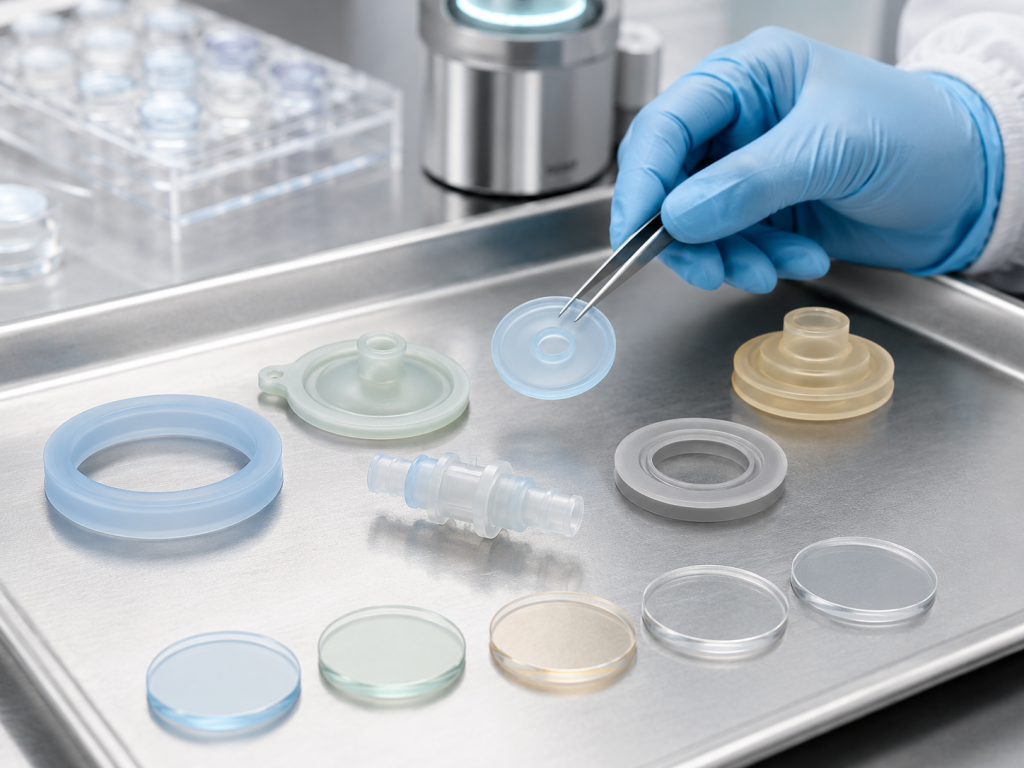
為何顏色在醫療用 LSR 組件中至關重要
顏色看似只是外觀上的要求,但在醫療器材中卻能發揮重要功能。.
常見的用途包括:
- 區分裝置尺寸
- 辨識不同的產品版本
- 區分可重複使用與一次性組件
- 標示流體路徑
- 協助正確組裝
- 辨識左、右組件
- 區分藥物遞送配置
- 提升臨床使用時的可見度
- 與品牌或產品系列相符
- 隱藏內部組件
- 提高對比度以利檢查
- 支援使用者介面設計
因此,顏色不匹配所造成的影響可能不僅僅是外觀上的問題。在某些應用情境中,這可能會導致組裝錯誤、產品選型錯誤、檢驗問題,或是在使用過程中造成混淆。.
所需顏色應被視為受控的產品特性。.
何謂醫療級 LSR 配色?
醫療級液態矽膠(LSR)的配色,是指在專為醫療保健組件設計的液態矽膠配方中,創造並控制特定顏色的過程。.
色彩系統通常包含:
- 經核准的基礎 LSR
- 一種或多種顏料
- 一種與矽膠相容的載體
- 一特定顏料濃度
- 一種受控給藥方法
- 核准的成型條件
- 經核准的後固化條件
- 定義的滅菌暴露
- 實體色彩標準
- 儀器色度限制
- 視覺驗收標準
變更其中任何一項要素,都可能影響最終結果。.
某種顏料在某種等級的液態矽膠(LSR)中能呈現正確的顏色,但在另一種等級中卻可能產生不同的外觀,這是因為不同等級的基材在透明度、填料含量、折射特性、固化化學特性及天然色澤方面可能有所不同。.
從預期的醫療應用開始著手
選擇顏色時,應以成品的預期用途為出發點,而非僅考量外觀。.
重要問題包括:
- 該彩色部件會接觸到患者嗎?
- 這種接觸是直接的還是間接的?
- 它會接觸到什麼組織或體液?
- 接觸會持續多久?
- 該零件是用於內部還是外部?
- 這是可重複使用還是拋棄式的?
- 產品會以無菌狀態供應嗎?
- 將採用哪種滅菌方法?
- 它會接觸藥物或製程流體嗎?
- 該醫療器材將在哪些受監管的市場上市?
- 該顏色是用來傳達安全資訊的嗎?
- 顏色變化會影響裝置的功能或檢驗嗎?
現行 ISO 10993-1:2025 框架是在風險管理流程中評估生物安全性,並將醫療器材的整體結構、其材料、製造過程以及預期與患者的接觸情況納入考量。.
患者接觸及臨床功能的關鍵性越高,就越應謹慎控制顏料系統及製造製程。.
“「醫用級色素」並非完全獲准
「醫用級顏料」一詞可指經醫療文件或生物測試開發而成的著色劑,但這並不表示該著色劑所製成的最終著色組件自動獲准用於所有醫療用途。.
適用性取決於:
- 精確的顏料成分
- 顏料濃度
- 載體組成
- 基礎 LSR
- 製造流程
- 與病患接觸類別
- 接觸時間
- 滅菌程序
- 包裝
- 目標市場
- 終端產品生物評估
美國食品藥物管理局(FDA)是根據特定應用情境下適當的宿主反應來定義生物相容性。這意味著若不考量其實際用途,便無法將某種材料或顏料描述為具有普遍的生物相容性。.
供應商的文件雖可作為評估的依據,但成品的安全性及是否符合法規要求,仍由設備製造商負責。.
了解完整的色彩系統
醫療級矽膠的著色系統並非僅由顏料製成。.
其中可能包含:
- 有機或無機顏料
- 矽膠載體
- 反應性矽樹脂聚合物
- 分散助劑
- 加工輔助劑
- 穩定成分
- 混合多種顏料以調配出單一色調
市售的矽膠色漿可能會使用分散於反應性矽膠聚合物中的顏料,以確保載體與矽膠基質相容。.
針對醫療專案,採購團隊應要求提供關於完整母粒的資訊——而不僅是顏色名稱。.
為何預分散矽酮著色劑更受青睞
若將乾燥顏料粉末直接加入 LSR 中,可能會導致操作、污染、分散及重複性等問題。.
預分散的矽膠色漿或色母粒可提供:
- 顏料分布更為均勻
- 更簡便的自動定量給藥
- 減少空氣中的粉塵
- 降低污染風險
- 更佳的色彩重現性
- 更快速的材料準備
- 提升可追溯性
- 更穩定的生產管控
目前市面上已有專為醫療用途設計的矽膠色漿,適用於軟質矽膠(LSR)與高回彈矽膠(HCR)應用,其中包含具備美國藥典(USP)第六類資訊及醫療相關文件支援的系統。.
然而,必須將著色劑的文件與基礎 LSR 及最終組件的文件一併審查。.
顏料選擇因素
顏料必須同時滿足視覺與技術上的要求。.
重要特性包括:
- 色彩飽和度
- 分散品質
- 熱穩定性
- 耐光性
- 耐化學性
- 滅菌穩定性
- 抗褪色性
- 對遷徙的抗拒
- 重金屬專題
- 生物紀錄
- 可萃取物分析報告
- 與鉑金固化型液態矽膠的相容性
- 批次間的一致性
- 變更控制下的可用性
鮮豔的顏色並不一定適合用於醫療產品。.
某些雖能提供優異視覺顯色度的顏料,卻可能缺乏所需的文件證明、滅菌穩定性或耐化學性。.
有機與無機顏料
矽膠著色系統中可同時使用有機與無機顏料。.
有機顏料
有機顏料可提供:
- 明亮的色調
- 高色力
- 廣泛的顏色範圍
- 特定配方具有良好的透明度
可能的顧慮包括:
- 熱穩定性
- 耐光性
- 耐化學性
- 輻射引起的顏色變化
- 批次一致性
- 監管文件
無機顏料
無機顏料可能具有以下特性:
- 高熱穩定性
- 遮蓋力佳
- 穩重的土色系或中性色調
- 對特定環境具有強大的抗性
可能的顧慮包括:
- 重金屬成分
- 降低色彩亮度
- 透光性降低
- 沉降或分散行為
- 色系選擇有限
正確的顏料類型取決於目標顏色、裝置要求、加工條件以及法規評估。.
美國食品藥物管理局(FDA)對醫療器材著色劑的考量
在美國,某些醫療器材中所使用的著色劑可能須遵守美國食品藥物管理局(FDA)關於著色劑的規定。FDA 指出,其允許的使用範圍取決於適用的清單以及該醫療器材的預期用途。.
對於僅獲准使用一次的著色添加劑,不應自動假定其適用於:
- 眼周
- 注射用製劑
- 外科縫合線
- 與病患的長期接觸
- 植入式裝置
- 另一個聯絡人類別
美國食品藥物管理局(FDA)針對個別色素添加劑,維持其特定用途的清單及限制規定。.
法規團隊在批准色料配方之前,應審查該色素的確切成分、預期用途、濃度、與患者的接觸情況,以及適用的市場要求。.
有色軟質矽膠的生物學評估
從風險管理的角度來看,添加顏料會形成一種新的材料配方。.
生物學評估應考量以下事項:
- 基礎矽膠配方
- 顏料配方
- 顏料載體
- 顏料濃度
- 加工輔助劑
- 後固化
- 滅菌
- 清潔
- 包裝
- 潛在的降解產物
- 可萃取物與可浸出物
ISO 10993-18 提供了一套框架,用於識別醫療器材的成分,並在必要時對其進行定量分析。ISO 10993-17 則針對已識別成分進行毒理學風險評估。.
雖說可取得的供應商資訊有助於減少不必要的測試,但該資訊必須與該特定經著色、加工及滅菌處理的組件直接相關。.
天然 LSR 與有色 LSR 並非自動等同
天然或半透明的 LSR 可能已經具備生物相容性測試資料。添加著色劑可能會改變:
- 化學成分
- 可萃取物分析報告
- 表面外觀
- 矯正行為
- 機械性能
- 滅菌反應
- 光學特性
- 檢驗能力
先前的生物學評估或許仍能提供有用的佐證資訊,但應將色素的添加情況記錄在案並加以評估。.
該評估應釐清現有證據是否仍具適用性,抑或是否需要進行額外的化學特性分析、毒理學評估或生物測試。.
醫療級軟質矽膠(LSR)配色過程中的純度風險
潛在的純度風險包括:
- 顏料不正確
- 未經核准的載體材料
- 工業級著色劑的替代方案
- 金屬污染物
- 灰塵污染
- 來自另一種顏色的交叉污染
- 混合設備中的殘留物
- 清潔劑殘留物
- 未受控的脫模劑
- 回收或再加工的材料
- 顏料團聚
- 劑量不正確
- 未經核准的供應商變更
某種顏色雖然在視覺上符合核准標準,但其化學配方仍可能不正確。.
對於醫療元件而言,產品識別與可追溯性與外觀同樣重要。.
鉑催化固化抑制
許多醫療用 LSR 材料採用鉑催化加成固化法。.
某些污染物可能會干擾固化反應,導致:
- 黏膩的表面
- 固化不完全
- 軟組織
- 機械強度降低
- 尺寸穩定性差
- 弱鍵結
- 表面缺陷
潛在的污染來源可能包括不合適的顏料、含硫材料、胺類、潤滑劑、清潔劑、手套、黏合劑,以及其他橡膠加工工序產生的殘留物。.
應針對該著色劑與所選用的鉑金固化型液態矽膠(LSR)的相容性進行具體評估。.
色彩濃度
顏料載量會同時影響外觀與材料性能。.
著色劑不足可能會導致:
- 色調過淺
- 高透光性
- 遮蓋力差
- 隨零件厚度變化顯著
- 可見的內部組件
- 批次間的變異性較大
過量的著色劑可能會導致:
- 比目標色更深的顏色
- 分散性差
- 加工不穩定性
- 固化行為的變化
- 表面缺陷
- 可萃取物風險增加
- 機械性質的變化
- 材料成本上升
經核准的配方應明定著色劑的濃度及可接受的添加量公差範圍。.
操作人員在生產過程中,若未經書面批准,不應憑肉眼判斷而增加顏料用量來調整色調。.
半透明度與零件厚度
LSR 通常呈半透明狀,因此其視覺顏色會隨材料厚度而變化。.
與使用相同材料模製而成的厚密封件相比,薄膜可能看起來輕得多。.
顏色外觀也可能受到以下因素的影響:
- 背景顏色
- 內部組件
- 表面質地
- 照明
- 可視角度
- 局部曲率
- 空氣間隙
- 金屬或塑膠嵌件
因此,色樣板應盡可能忠實地呈現量產零件的厚度、質感及基材特性。.
厚實且平坦的實驗室樣板,可能無法準確預測薄型醫療閥門或透明包覆成型件的外觀。.
運用樂器特質來定義色彩
諸如「醫療藍」或「淺灰色」這類文字描述,對於生產管控而言不夠精確。.
該規格應採用可量化的色彩系統。.
CIE Lab* 色彩空間透過以下方式定義顏色:
- L*: 輕盈感
- a*: 由紅轉綠的方向
- b*: 由黃色至藍色的方向
ISO/CIE 11664-4:2019 定義了 CIE 1976 Lab* 色彩空間。.
色差可透過既定的 Delta E 方法進行評估。ISO/CIE 11664-6:2022 規範了 CIEDE2000 色差公式。.
採購規格應明確說明所需採用何種色差公式。若僅將限值寫為「Delta E 小於 1.0」,而未同時定義測量方法、儀器設定及測量條件,則該限值即屬不完整。.
色彩規格應包含哪些內容
完整的色彩規格可能包含:
- 目標 L*、a* 和 b* 值
- 允許的色差
- Delta E 公式
- 儀器類型
- 測量幾何學
- 光源
- Observer angle
- 測量孔徑
- Specular-included or specular-excluded mode
- 樣品厚度
- 表面質地
- 背景顏色
- 讀數次數
- Measurement locations
- Conditioning time
- Temperature and humidity
- Pre- or post-sterilization condition
These settings should be consistent between the customer, material supplier, colorant supplier, and molding factory.
Visual Approval Is Still Necessary
Instrumental color values are important, but they may not capture every visually significant difference.
Visual inspection can identify:
- 連勝紀錄
- Pigment spots
- Swirl marks
- 不均勻的分散
- Surface haze
- Local discoloration
- Transparency variation
- 污染
- Mold-related gloss differences
Visual approval should be performed under controlled lighting rather than beside a window or under mixed factory lighting.
The inspection procedure should define:
- Light source
- Viewing distance
- 可視角度
- 背景
- Inspection time
- Approved reference sample
- Inspector training
- Acceptance criteria
Instrumental measurement and visual evaluation should be used together.
Create a Physical Color Standard
A digital image, computer monitor, or printed Pantone page should not be the final production standard for a translucent silicone component.
The approved standard should ideally be a molded physical sample made with:
- The approved LSR
- The approved pigment system
- The target concentration
- Representative thickness
- Representative mold texture
- Approved curing conditions
- Approved post-curing
- Intended sterilization, when applicable
The standard should be identified, protected from light and contamination, and replaced according to a defined control procedure.
A master standard can be stored under controlled conditions, while working standards are used on the production floor.
Color Matching Development Process
Phase 1: Define the Target
Provide the color supplier with:
- Physical color reference
- 目標 L*、a* 和 b* 值
- Intended part thickness
- 表面質地
- Required opacity
- Base LSR grade
- 滅菌方法
- 與病患接觸類別
- 目標市場
- Required documentation
Phase 2: Develop Laboratory Samples
Prepare several candidate shades using the approved base silicone.
Record:
- Pigment identities
- Mixing ratios
- Total loading
- 混合方法
- Cure conditions
- 樣品厚度
- Color measurements
- Visual observations
Phase 3: Mold Production-Representative Samples
Laboratory mixing may not reproduce production appearance.
Samples should be molded using representative:
- Metering equipment
- Color dosing
- Mixer
- 模具溫度
- 固化時間
- Injection settings
- Tool surface
- 零件厚度
- 後固化條件
Phase 4: Evaluate Functional Properties
Check whether the color system affects:
- 硬度
- 抗拉強度
- 伸長率
- 抗撕裂性
- 壓縮永久變形
- Valve performance
- Sealing force
- Bonding
- Surface friction
- 光學檢測
- 尺寸
Phase 5: Apply Sterilization and Aging
Evaluate samples before and after:
- Ethylene oxide exposure
- 蒸汽滅菌
- 伽馬輻射
- Electron-beam irradiation
- X-ray sterilization
- Vaporized hydrogen peroxide
- 加速老化
- Real-time aging
- Repeated cleaning or disinfection
The relevant methods depend on the finished device.
Certain medical LSR grades are marketed with compatibility data for steam, gamma, electron beam, and ethylene oxide sterilization, but performance remains grade- and application-specific.
Phase 6: Freeze the Formulation
After approval, lock:
- Base LSR grade
- Pigment grades
- Pigment suppliers
- Carrier
- 混合比例
- Color concentration
- 加工條件
- 後固化
- Sterilization condition
- 檢驗限值
The final formulation should receive a unique internal material code.
Sterilization-Related Color Change
Sterilization can affect the appearance of colored silicone.
Potential changes include:
- 泛黃
- 漸暗
- 褪色
- Loss of translucency
- Increased haze
- Shift in red, green, blue, or yellow tone
- Different color response after aging
The amount of change can depend on:
- LSR formulation
- 顏料化學
- 顏料濃度
- 滅菌方法
- Radiation dose
- Steam temperature
- Number of cycles
- Oxygen exposure
- 包裝
- Time after sterilization
- 儲存條件
A color system should not be approved based only on unsterilized samples when the final product is supplied sterile.
Ethylene Oxide Validation
ISO 11135 specifies requirements for developing, validating, and routinely controlling ethylene oxide sterilization processes for medical devices.
For color validation, evaluate samples:
- Before EO exposure
- Immediately after aeration
- After a defined stabilization period
- After accelerated aging
- At the end of shelf life, where required
The acceptance criteria should distinguish between an acceptable predictable shift and an uncontrolled change.
Radiation Validation
Radiation testing should include the minimum and maximum expected dose rather than only the nominal dose.
請考慮:
- 伽馬輻射
- Electron beam
- X-ray
- Multiple exposures
- Dose mapping
- Post-irradiation aging
- Packaging atmosphere
The color may continue changing after radiation exposure, so measurement timing should be standardized.
Mechanical properties and color appearance should be evaluated separately. A component can remain mechanically functional while experiencing an unacceptable visual change.
Steam-Sterilization Validation
Reusable medical devices may undergo repeated steam cycles.
Evaluate color after:
- One cycle
- The expected routine number of cycles
- The maximum claimed number of cycles
- 乾燥
- Storage after cycling
Repeated heat and moisture exposure can also affect gloss, transparency, surface deposits, bonding, and dimensional stability.
Color Dosing and Mixing
LSR is commonly supplied as two components that are metered and mixed before injection.
The colorant may be introduced through a controlled dosing system.
Important process variables include:
- Dosing ratio
- Pump calibration
- Colorant viscosity
- 材料溫度
- Mixing efficiency
- Mixer design
- Line pressure
- Startup purge
- Material residence time
- Color-change procedure
Insufficient mixing can produce streaks and local shade variation.
Excessive material residence time may create processing instability or cured deposits inside the system.
防止交叉污染
Medical LSR color changes require controlled cleaning.
Residual pigment may remain in:
- Dosing pumps
- Hoses
- Static mixers
- Injection units
- Valves
- Mold runners
- Tool vents
- Material containers
- Handling equipment
A light color produced after a dark color is particularly sensitive to contamination.
The manufacturer should define:
- Production sequence
- Purge quantity
- 清潔方法
- Line-clearance inspection
- First-piece approval
- Acceptable transition scrap
- Equipment-dedication requirements
For highly sensitive applications, dedicated color equipment may be appropriate.
Mold Surface and Gloss
The same silicone formulation can appear different when molded against different tool finishes.
A polished surface may look:
- 更暗
- 更飽和
- More transparent
- Glossier
A textured surface may look:
- 打火機
- More diffuse
- Less transparent
- Lower in gloss
Color plaques should use the same or a representative mold finish.
Tool maintenance can also change surface appearance over time, so gloss and texture should be monitored where they are critical.
Post-Curing Effects
Post-curing may be used to reduce selected volatile residues or stabilize material properties.
It may also affect:
- 顏色
- 透明度
- 氣味
- 表面外觀
- 機械性能
The approved color should be evaluated after the complete post-curing cycle.
Post-curing variables should include:
- 溫度
- 時間
- 空氣循環
- Oven loading
- 零件佈局
- Cooling method
- Delay before measurement
Changing the post-curing cycle can invalidate the approved color result.
Production Color-Control Plan
A practical production plan may include:
Incoming Inspection
Verify:
- Base LSR identity
- Base LSR lot
- Pigment identity
- Pigment lot
- 分析證明書
- 保存期限
- Storage condition
- Packaging integrity
- Approved supplier status
Startup Approval
Check:
- Correct material code
- Dosing-system setup
- 混合比例
- Purge completion
- 模具溫度
- 固化時間
- First-piece color
- 表面缺陷
In-Process Inspection
顯示器:
- L*, a*, and b* values
- Delta E
- 連勝紀錄
- Pigment spots
- 污染
- 詞彙表
- 透明度
- 零件厚度
- Dosing alarms
- 製程參數
最終檢驗
請確認:
- Color compliance
- 外觀
- 尺寸
- Functional properties
- 批次可追溯性
- 包裝
- Required documentation
Sampling Frequency
Color variation can occur during startup, material changes, pigment-lot changes, and process interruptions.
Sampling should therefore consider:
- Beginning of batch
- Middle of batch
- End of batch
- Each cavity
- Each pigment lot
- Each LSR lot
- Equipment restart
- Extended shutdown
- Process adjustment
- Mold maintenance
A single first-piece measurement may not adequately represent a long production run.
Cavity-to-Cavity Variation
In multi-cavity molds, apparent color can differ because of:
- Thickness differences
- Temperature variation
- Fill pattern
- Cure variation
- 發洩
- 黴菌質地
- 尺寸公差
Color qualification should include all cavities.
When possible, each cavity should be traceable so recurring differences can be investigated.
Documentation to Request
The pigment or masterbatch supplier may be asked to provide:
- Technical data sheet
- 安全資料表
- 分析證明書
- Pigment identity information
- Carrier information
- Biological test summary
- 關於 USP 第 VI 類的資訊
- Regulatory statements
- Heavy-metal declaration
- 受管制物質聲明
- Sterilization information
- Lightfastness data
- Heat-stability data
- Chemical-resistance information
- 保存期限
- 儲存條件
- 變更通知政策
- Lot-traceability information
The exact documentation depends on the device and regulatory market.
Quality-System Controls
ISO 13485:2016 specifies quality-management-system requirements intended for organizations involved in medical-device design and manufacturing.
Relevant controls for medical LSR color production include:
- Approved suppliers
- Documented formulations
- Incoming-material control
- Equipment calibration
- 製程驗證
- 批次可追溯性
- Nonconforming-material control
- Change control
- Record retention
- Corrective action
- Complaint investigation
A quality-system certificate supports supplier qualification but does not approve a specific pigment or molded component.
Change Control
Color systems are highly sensitive to changes.
The supplier should notify the customer before changing:
- Pigment manufacturer
- 顏料化學
- Pigment manufacturing site
- 載體組成
- Colorant formulation
- Base LSR grade
- Base LSR supplier
- LSR manufacturing site
- 計量設備
- Mixing equipment
- Mold location
- Mold surface
- Post-curing process
- 清潔劑
- 滅菌方法
- Packaging materials
A change should be assessed for potential impact on:
- 顏色
- 生物安全
- Chemical characterization
- 機械性能
- 滅菌穩定性
- Regulatory submissions
- 保存期限
Recommended Validation Matrix
A robust validation plan may compare:
- Minimum pigment concentration
- Nominal pigment concentration
- Maximum pigment concentration
- Multiple pigment lots
- Multiple LSR lots
- Minimum cure temperature
- Nominal cure temperature
- Maximum cure temperature
- Minimum cure time
- Maximum cure time
- 每個模具型腔
- Before post-curing
- 後固化後
- Before sterilization
- After maximum sterilization exposure
- After accelerated aging
- After chemical exposure
The objective is to demonstrate that the color remains acceptable throughout the validated manufacturing and use conditions.
Common Color-Matching Problems
The Part Is Too Light
Possible causes include:
- Low colorant concentration
- Thin wall
- Incorrect background
- Poor dosing
- Excessive translucency
- Wrong base LSR
- Incomplete mixing
The Part Is Too Dark
Possible causes include:
- Excess colorant
- Thick wall
- 顏料不正確
- Longer cure exposure
- Surface gloss difference
- Contamination from a darker color
The Color Is Uneven
Possible causes include:
- 攪拌不均
- 顏料團聚
- Dosing instability
- Flow-related variation
- Temperature imbalance
- Incomplete purging
- 污染
The Color Changes After Sterilization
Possible causes include:
- Pigment instability
- Base LSR response
- Excess radiation dose
- Repeated steam exposure
- 包裝互動
- Post-sterilization oxidation
- Measurement performed too soon
Instrumental Results Pass but the Part Looks Wrong
Possible causes include:
- Gloss difference
- Texture difference
- Metamerism
- Local streaks
- Transparency variation
- Thickness variation
- Measurement location
- Background difference
The First Batch Passes but Later Batches Fail
Possible causes include:
- Pigment lot variation
- LSR lot variation
- Pump drift
- Equipment wear
- Mold-temperature change
- Purging inconsistency
- Supplier formulation change
- Reference-standard aging
Information to Include in an RFQ
To request a quotation for a colored medical LSR component, provide:
- Two-dimensional drawing
- Three-dimensional model
- Exact base LSR requirement
- 與病患接觸類別
- 接觸時間
- Target regulatory markets
- Physical color reference
- 目標 L*、a* 和 b* 值
- Required Delta E method and limit
- 零件厚度
- 表面質地
- Transparency or opacity requirement
- 滅菌方法
- Maximum sterilization exposure
- 後固化要求
- 生物學評估要求
- Colorant documentation requirements
- Mechanical-property requirements
- Annual quantity
- 原型數量
- Cleanroom requirements
- Traceability requirements
- 包裝要求
- Change-notification requirements
Do not request only “medical blue silicone.” The supplier needs measurable color, application, processing, and regulatory requirements.
Supplier Qualification Questions
Ask the LSR molding supplier:
- Which healthcare colorant systems do you use?
- Are pigments pre-dispersed in a silicone-compatible carrier?
- Can the pigment lot be traced to each production batch?
- Is the color dosing system calibrated?
- How is dosing accuracy monitored?
- How are color changes cleaned and verified?
- Is dedicated equipment available?
- How are reference standards controlled?
- Which color-measurement system is used?
- Are all mold cavities measured?
- Can sterilized samples be evaluated?
- How are pigment changes communicated?
- Can the supplier provide production-equivalent validation samples?
- Are regrind or recycled materials prohibited?
- Can the supplier support chemical and biological documentation?
結論
Medical LSR color matching is a controlled material-development and validation activity—not only a cosmetic adjustment.
A reliable color system requires:
- An approved base LSR
- A controlled healthcare pigment system
- A compatible silicone carrier
- Defined pigment concentration
- Instrumental color specifications
- Physical reference samples
- Controlled molding and post-curing
- Sterilization validation
- Biological and chemical assessment
- 批次可追溯性
- Supplier change control
The natural and colored versions of an LSR should not automatically be treated as equivalent.
The safest approach is to develop the color using the exact production material, mold representative components, apply the intended post-curing and sterilization processes, and validate both appearance and functional performance under the expected lifecycle conditions.
常見問題
Can standard industrial silicone pigment be used in a medical LSR component?
It should not be used without a documented assessment. The pigment, carrier, concentration, patient contact, sterilization method, and applicable regulatory requirements must be reviewed.
Does a USP Class VI pigment make the final component compliant?
No. Supplier testing can support the evaluation, but the finished colored, processed, and sterilized component must be assessed for its intended use.
Should a natural LSR and a colored LSR be considered the same material?
Not automatically. Adding pigment changes the formulation and may affect chemical characterization, biological evaluation, sterilization response, and mechanical properties.
What is the best way to define an LSR color?
Use an approved physical molded sample together with target L*, a*, and b* values, a defined Delta E formula, and controlled measurement conditions.
Why does the same color look different in thin and thick silicone parts?
Translucent silicone allows light to pass through the material. Apparent color therefore changes with thickness, background, surface texture, and internal components.
Should color be measured before or after sterilization?
Both may be required. The final acceptance condition should represent the product as supplied for use, including sterilization and aging when relevant.
Can gamma radiation change the color of medical LSR?
The response depends on the base LSR, pigment, dose, packaging, and post-irradiation aging. The exact colored formulation should be tested at the validated minimum and maximum exposure.
Can the pigment affect LSR curing?
Yes. An incompatible pigment, carrier, or contaminant may interfere with platinum curing. The complete color system should be qualified with the selected LSR.
What causes color streaks in injection-molded LSR?
Common causes include inadequate mixing, unstable pigment dosing, incomplete purging, pigment agglomeration, temperature variation, and contamination from a previous color.
How should pigment substitutions be controlled?
Any change in pigment grade, supplier, carrier, formulation, concentration, or manufacturing site should require documented notification and technical assessment before use.
SEO Information
SEO Title: Medical LSR Color Matching: Pigments, Purity & Validation
Meta Description: Learn how to control medical LSR color matching through healthcare pigments, purity assessment, CIELAB measurement, sterilization testing and production validation.
URL Slug: /medical-lsr-color-matching-pigments-purity-validation/
TAGS: medical LSR color matching,medical silicone pigments,LSR color masterbatch,medical grade silicone colorant,LSR color validation,medical silicone purity,CIELAB silicone color,Delta E color matching,sterilization color change,colored medical silicone,medical LSR molding,healthcare silicone components
 English
  Japanese
  Korean
  German
  French
  Italian
  Spanish
  Dutch
Dutch  Chinese
  Portuguese
  Polish
  Czech
Czech  Hungarian
  Swedish
  Finnish
  Vietnamese
  Thai
Thai  Turkish
  Arabic
  Russian