
Liquid Silicone Rubber, also known as LSR, is a high-performance silicone material widely used in medical devices, baby products, consumer electronics, automotive parts, sealing components, kitchenware, and many custom molded silicone products. Compared with traditional solid silicone rubber, LSR has excellent flowability, high precision molding capability, soft-touch performance, and strong resistance to heat, aging, and deformation.
For brands, product developers, and industrial buyers, LSR is an important material choice when a product requires safety, flexibility, precision, durability, and stable performance in daily or demanding environments.
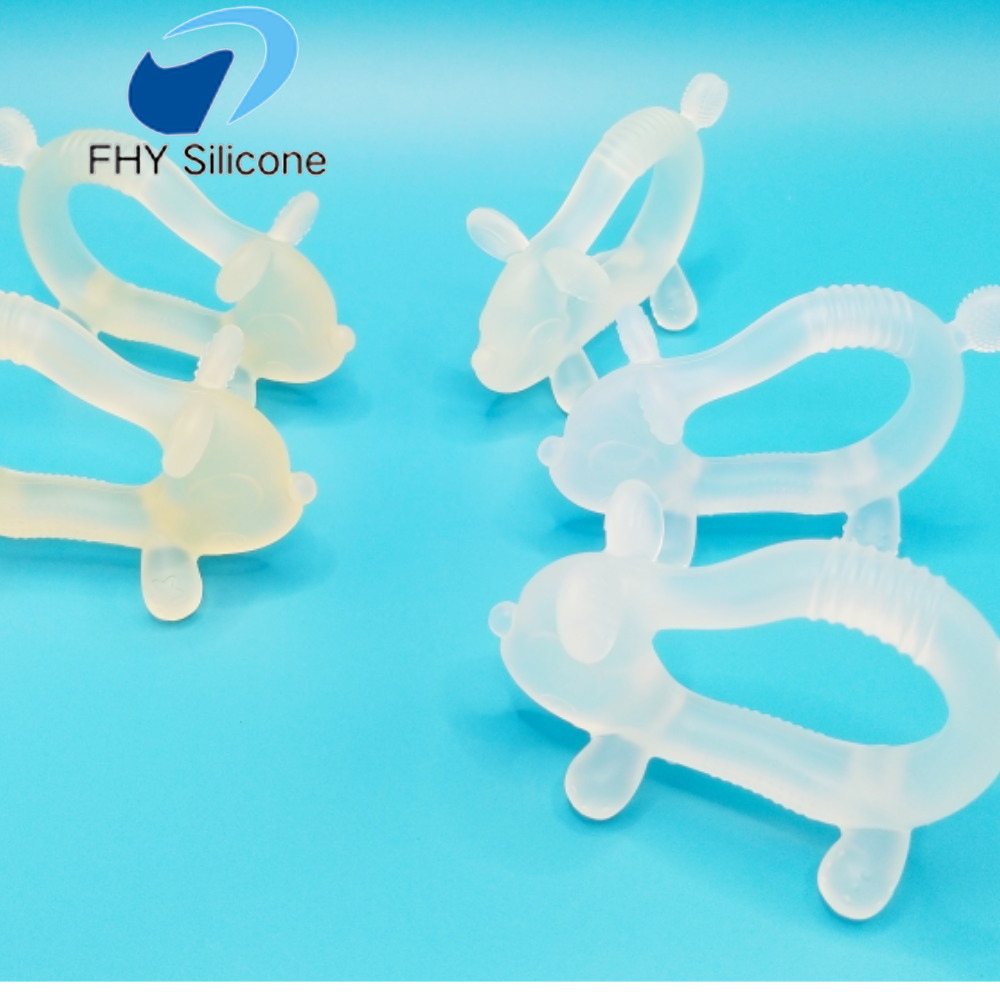
What Is Liquid Silicone Rubber?
Liquid Silicone Rubber is a two-component silicone material, usually supplied as Part A and Part B. These two parts are mixed in a fixed ratio before molding. After mixing, the material is injected into a mold and cured under heat to form the final silicone product.
LSR is different from traditional solid silicone because it has better flowability before curing. This makes it suitable for complex shapes, thin-wall structures, small details, integrated designs, and high-volume production.
Because of its excellent material stability and soft texture, LSR is widely used in products that require direct skin contact, food contact, sealing performance, or precision structure.
Key Features of Liquid Silicone Rubber
One major advantage of LSR is its excellent flexibility. Products made from LSR can be soft, elastic, and comfortable to touch, making the material suitable for baby products, wearable parts, medical components, and grip accessories.
LSR also has strong temperature resistance. It can perform well in both high and low temperature environments, which makes it useful for kitchenware, feeding products, automotive parts, industrial seals, and electronic components.
Another important feature is aging resistance. LSR products are not easy to crack, harden, or deform after long-term use. This helps improve product lifespan and reliability.
LSR can also support precise molding. It is suitable for small parts, complex structures, thin edges, fine textures, and integrated silicone components. This is one reason why LSR is widely used in medical, electronics, and high-precision applications.
LSR vs Solid Silicone Rubber
Both LSR and solid silicone rubber belong to the silicone material family, but they are different in processing methods and application advantages.
Solid silicone rubber is usually processed by compression molding or transfer molding. It is widely used for general silicone products such as mats, simple sealing parts, baby bibs, kitchen tools, and common molded silicone items.
LSR is usually processed by injection molding. It has better flowability and is more suitable for precision parts, complex shapes, high-volume production, and automated manufacturing.
For products that require high dimensional accuracy, stable quality, clean production, or overmolding with plastic or metal, LSR is often the better choice.
Where Is Liquid Silicone Rubber Used?
1. Baby Products
LSR is widely used in baby care and feeding products because it is soft, flexible, and suitable for products that need a gentle touch. Common applications include baby spoons, pacifiers, bottle nipples, feeding accessories, teethers, training cups, and soft-touch components.
For baby products, comfort and safety are extremely important. LSR can be molded into smooth edges, soft surfaces, and ergonomic shapes. It can also be customized in different hardness levels, colors, textures, and designs according to brand requirements.
2. Medical and Healthcare Products
Medical and healthcare products often require materials with high stability, precision, and biocompatibility-related performance. LSR is commonly used for masks, valves, seals, tubes, respiratory components, medical device parts, and wearable healthcare accessories.
Because LSR can support clean molding, fine details, and stable performance, it is suitable for many medical-grade silicone components. In medical applications, manufacturers usually need stricter control over material selection, production environment, dimensional accuracy, and quality inspection.
3. Consumer Electronics
LSR is also widely used in consumer electronics because it can provide sealing, protection, cushioning, waterproofing, and soft-touch functions.
Common applications include phone accessories, earbud components, waterproof seals, charging port covers, buttons, protective sleeves, electronic gaskets, and wearable device parts.
For electronic products, LSR can help improve product durability and user experience. It can also be overmolded with plastic or metal parts to create integrated components with better sealing and structural performance.
4. Automotive Components
Automotive parts often need materials that can withstand heat, vibration, aging, and environmental exposure. LSR is used in automotive seals, connectors, gaskets, keypads, sensor parts, lighting components, and protective covers.
The flexibility and heat resistance of LSR make it suitable for both interior and functional automotive applications. It can help improve sealing performance and long-term reliability.
5. Kitchenware and Food-Contact Products
LSR is suitable for many food-contact products because it is flexible, heat-resistant, and easy to clean. It is used in silicone lids, sealing rings, baking tools, kitchen utensils, food storage parts, bottle accessories, and drinkware components.
For kitchenware, LSR can provide soft-touch performance and resistance to repeated heating and cleaning. Brands can customize colors, shapes, logos, and packaging to create attractive retail products.
6. Sealing and Industrial Components
LSR is commonly used for sealing rings, gaskets, valves, plugs, protective covers, and custom industrial silicone parts. These components may be used in machinery, electronics, appliances, fluid systems, and other industrial equipment.
For sealing applications, LSR offers flexibility, compression recovery, temperature resistance, and aging resistance. Custom hardness, size, structure, and material properties can be adjusted according to specific working conditions.
7. LSR Overmolding Applications
One of the most valuable uses of LSR is overmolding. LSR overmolding means liquid silicone is molded directly onto another material, such as plastic, metal, or other components.
This process is commonly used when a product needs both a rigid structure and a soft silicone surface. Examples include silicone over plastic parts, silicone over metal components, soft-touch handles, waterproof electronic parts, medical device components, baby product accessories, and sealing structures.
LSR overmolding can improve product integration, reduce assembly steps, enhance sealing performance, and create a more comfortable user experience.
Benefits of Using LSR for Custom Products
LSR is an excellent material choice for custom products because it offers both functional and design advantages.
It supports complex shapes and precise structures, which helps product developers create innovative designs. It can be customized in different colors, hardness levels, transparency levels, textures, and surface finishes.
LSR also supports efficient mass production. With proper mold design and automated injection molding equipment, manufacturers can produce stable, consistent products in large quantities.
For B2B customers, this means LSR can help improve product quality, production efficiency, and market competitiveness.
What to Consider Before Choosing LSR
Although LSR offers many advantages, it is not always the best choice for every product. Before choosing LSR, buyers should consider product function, structure complexity, production quantity, material requirements, certification needs, mold cost, and target price.
LSR injection molds are usually more complex than simple compression molds, so the initial mold cost may be higher. However, for precision products, high-volume orders, or complex overmolded parts, LSR can provide better consistency and long-term production value.
Working with an experienced silicone manufacturer is important. The manufacturer should be able to evaluate material hardness, mold design, product structure, parting line, shrinkage, bonding performance, and mass production feasibility.
Final Thoughts
Liquid Silicone Rubber is a versatile and high-performance material used in many industries, including baby products, medical devices, consumer electronics, automotive parts, kitchenware, sealing components, and custom industrial products.
Its softness, flexibility, temperature resistance, aging resistance, precision molding capability, and overmolding performance make it an excellent choice for products that require safety, comfort, durability, and reliable function.
For companies looking to develop custom silicone products, LSR offers strong possibilities for product innovation. With the support of OEM and ODM manufacturing services, brands can create customized LSR products with unique shapes, colors, functions, logos, and packaging to meet different market needs.
 English
  Japanese
  Korean
  German
  French
  Italian
  Spanish
  Dutch
Dutch  Chinese
  Portuguese
  Polish
  Czech
Czech  Hungarian
  Swedish
  Finnish
  Vietnamese
  Thai
Thai  Turkish
  Arabic
  Russian