
1. Introduction: Why Silicone Safety Matters in Baby Products
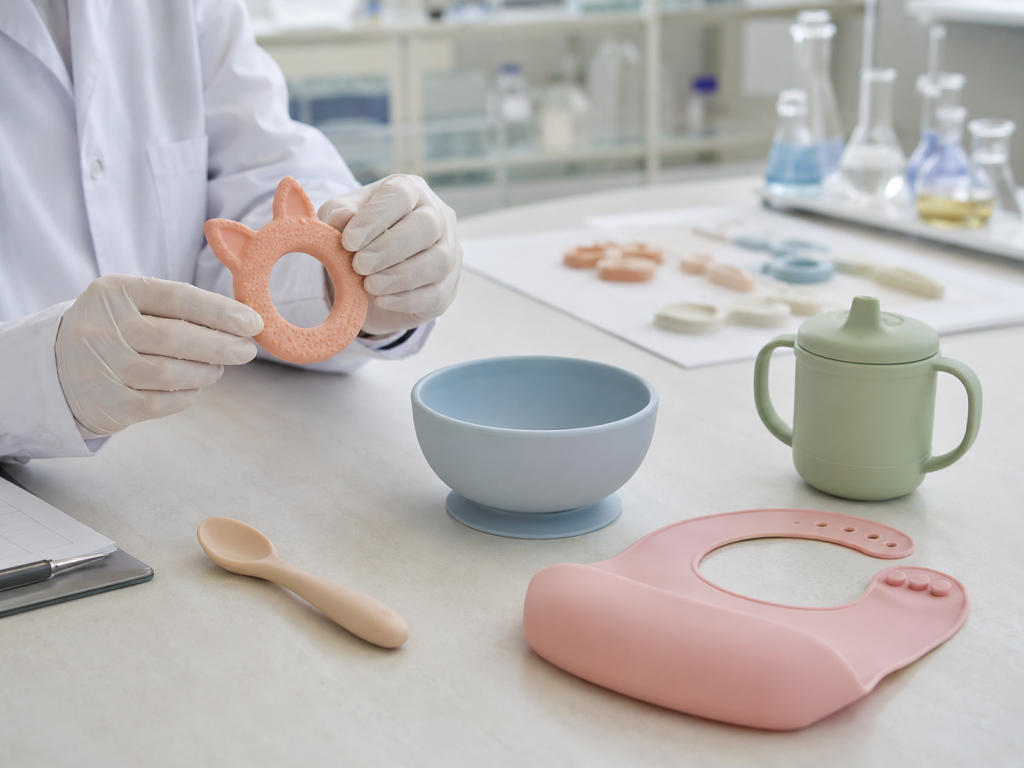
Food-grade silicone has become one of the most widely used materials in baby care products such as teethers, feeding bottles, suction bowls, and training cups. Compared with traditional plastics, silicone offers higher thermal stability, chemical inertness, and flexibility.
However, not all silicone materials are suitable for infant applications. In OEM production, improper material selection or process control may lead to migration risks, odor issues, or long-term degradation. Therefore, understanding how to evaluate food-grade silicone safety is critical for manufacturers, brands, and product developers.
2. What Is Food-Grade Silicone?
Food-grade silicone is typically made from platinum-cured liquid silicone rubber (LSR) or high-purity solid silicone elastomers that meet international safety standards.
Key characteristics include:
- High chemical stability
- No BPA, PVC, or phthalates
- Odorless and non-toxic
- High resistance to heat (-40°C to +200°C)
- Excellent flexibility and durability
In baby products, platinum-cured silicone is preferred due to its lower by-products and higher purity compared to peroxide-cured alternatives.
3. Key International Standards for Baby Silicone Products
When selecting silicone materials for OEM baby products, compliance with global regulations is essential:
3.1 FDA (USA)
- CFR 21 Part 177.2600
- Ensures material is safe for food contact applications
3.2 LFGB (Germany / EU Standard)
- More strict than FDA in migration testing
- Includes sensory evaluation (odor and taste neutrality)
3.3 REACH & RoHS Compliance
- Restricts hazardous chemical substances
- Ensures environmental safety
3.4 EN 14350 (Baby Drinking Equipment)
- Specific standard for infant feeding products in Europe
A qualified OEM manufacturer must be able to provide full certification and traceability reports.
4. Critical Factors in OEM Silicone Production
4.1 Raw Material Selection
Only platinum-cured LSR or medical-grade silicone should be used for infant applications. Material consistency directly affects safety and mechanical performance.
4.2 Mold Design and Structural Safety
Design must consider:
- No sharp edges
- Anti-choking geometry
- Easy cleaning structures
- Controlled wall thickness
4.3 Manufacturing Process Control
Key parameters include:
- Injection temperature stability
- Post-curing process (to remove volatile compounds)
- Cleanroom production environment (optional for high-end products)
4.4 Additives and Pigments
Only certified food-safe pigments should be used. Industrial pigments may introduce heavy metal risks.
5. Common Risks in Low-Quality Silicone Products
Poor OEM control may result in:
- Strong odor after molding
- Surface blooming or oil leakage
- Color fading after sterilization
- Micro-cracks after repeated stretching
- Non-compliance with migration limits
These issues usually come from low-quality raw materials or insufficient post-curing.
6. How to Evaluate a Reliable OEM Manufacturer
A professional silicone OEM supplier should provide:
6.1 Material Certification
- FDA / LFGB / SGS test reports
6.2 Production Capability
- LSR injection molding capability
- Multi-cavity mold systems
- Precision tolerance control
6.3 Quality Control System
- Incoming material inspection
- In-process monitoring
- Final product testing
6.4 Engineering Support
- DFM (Design for Manufacturing) analysis
- Mold optimization suggestions
- Prototype sampling support
7. Trends in Baby Silicone OEM Industry
The industry is moving toward:
- High-precision LSR injection molding
- Multi-material overmolding (PP + silicone, PC + silicone)
- Sustainable and recyclable silicone materials
- Smart baby products integration (sensor-based feeding tools)
OEM manufacturers that combine engineering capability + material expertise will have stronger competitiveness.
8. Conclusion
Selecting safe food-grade silicone for baby products is not only a material decision but also an engineering and compliance process. OEM buyers should evaluate suppliers based on certifications, process control, material quality, and manufacturing capability.
For long-term brand safety and product reliability, working with a professional silicone OEM factory with LSR injection and quality system control is essential.
 English
  Japanese
  Korean
  German
  French
  Italian
  Spanish
  Dutch
Dutch  Chinese
  Portuguese
  Polish
  Czech
Czech  Hungarian
  Swedish
  Finnish
  Vietnamese
  Thai
Thai  Turkish
  Arabic
  Russian