
When choosing baby feeding products, material safety, comfort, durability, and ease of cleaning are always important considerations. Parents want products that are safe for daily use, while baby product brands, retailers, and distributors need materials that are reliable, marketable, and suitable for customization.
Silicone and plastic are two common materials used in baby feeding products, including baby bowls, spoons, plates, cups, food containers, bibs, and training tableware. Both materials have their own advantages, but food-grade silicone has become increasingly popular in the baby care market because of its soft touch, flexibility, heat resistance, and user-friendly performance.
So, silicone vs plastic: which material is better for baby feeding products? This article explains the key differences and helps brands make a better decision when developing baby feeding product lines.
What Is Food-Grade Silicone?
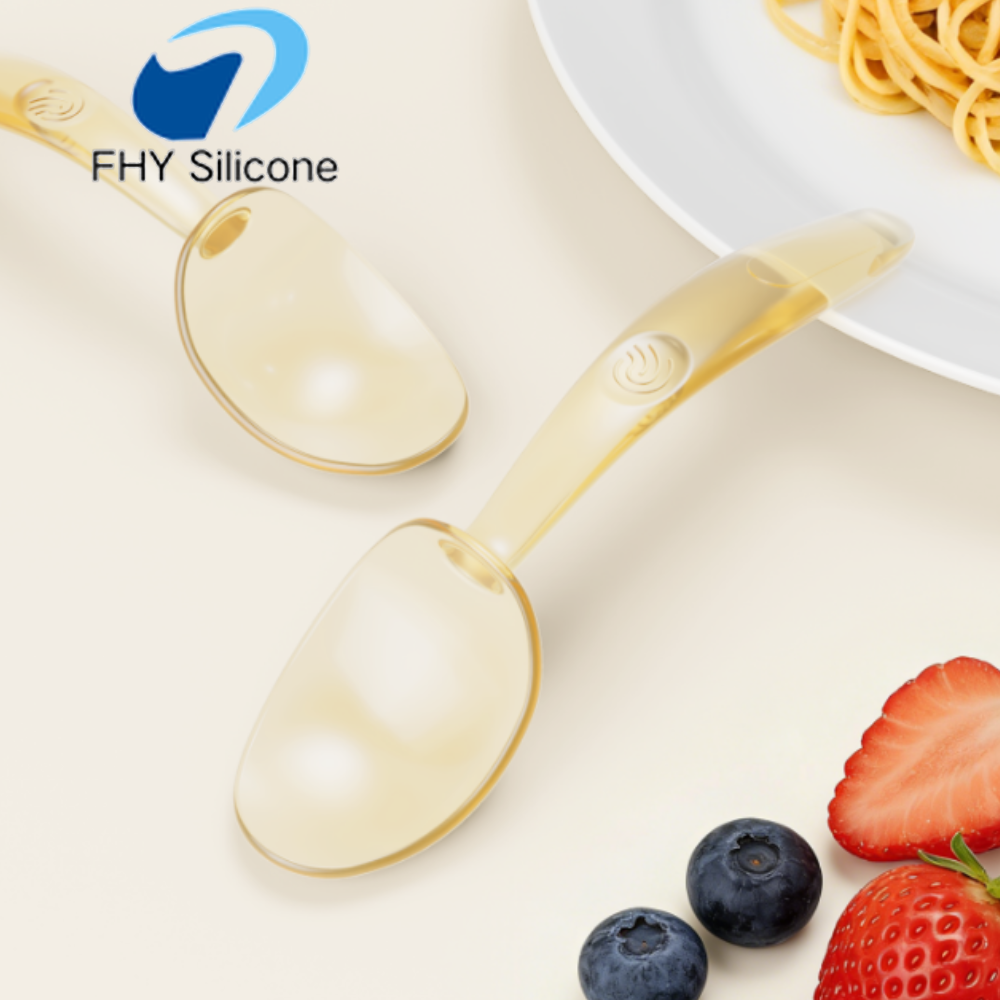
Food-grade silicone is a soft, flexible, and durable material widely used in baby products, kitchenware, drinkware accessories, and food-contact applications. It is commonly used for baby spoons, suction bowls, plates, bibs, teethers, training cups, and food storage products.
One of the biggest advantages of silicone is its soft and comfortable texture. For baby feeding products, this is especially important because babies and toddlers are still developing their motor skills. A soft silicone spoon, bowl, or training cup can provide a more comfortable feeding experience and help reduce the risk of hard impact during use.
Silicone is also resistant to high and low temperatures, making it suitable for many daily feeding scenarios, such as warm food, cold snacks, cleaning, and storage.
What Is Plastic?
Plastic is also widely used in baby feeding products because it is lightweight, easy to shape, and cost-effective. Common plastic baby products include feeding bottles, cups, food containers, plates, and spoons.
Plastic can be manufactured in many colors, shapes, and designs. It is often used when brands want lightweight products with rigid structures or transparent appearances. Some plastic materials, such as PP, PPSU, and Tritan, are commonly used in baby feeding and drinking products.
However, plastic materials vary greatly in quality and performance. Different plastics have different heat resistance, impact resistance, aging performance, and food-contact suitability. For baby products, brands must carefully choose safe and compliant plastic materials.
Safety for Baby Feeding Products
Safety is the first priority for baby feeding products. Both silicone and plastic can be safe when made from high-quality, food-contact-grade materials and produced under proper manufacturing standards.
Food-grade silicone is widely preferred because it is soft, stable, and suitable for direct food contact. It does not easily crack or become sharp after long-term use, which makes it suitable for baby spoons, bibs, suction bowls, and plates.
Plastic products can also be safe, but buyers need to pay close attention to material selection. Low-quality plastic may deform, scratch, age, or release odor more easily under heat or long-term use. For baby feeding products, brands should avoid unknown materials and choose reliable food-contact plastics.
For B2B buyers, the key point is not simply “silicone is safe and plastic is unsafe.” The real difference lies in material grade, production quality, testing support, and application design.
Softness and Comfort
Silicone has a clear advantage in softness and comfort. Baby feeding products are often used by infants and toddlers who may bite, drop, squeeze, or touch the product frequently.
A silicone baby spoon is gentle on gums. A silicone bowl or plate is soft around the edges. A silicone bib feels flexible and comfortable around the neck. These features make silicone especially suitable for young babies and early self-feeding stages.
Plastic is usually harder and more rigid. This can be useful for products that need strong structure, such as feeding bottles or rigid cups. However, for spoons, bowls, bibs, and training products, plastic may feel less gentle compared with silicone.
Durability and Daily Use
Both silicone and plastic can be durable, but they perform differently in daily use.
Silicone is flexible and not easy to break when dropped. It can be bent, squeezed, and folded without cracking easily. This is a major benefit for baby products because babies often throw or drop items during feeding.
Plastic is lightweight and can be strong, but some plastic products may crack, scratch, or become cloudy after repeated use. Scratches on plastic surfaces may also make cleaning more difficult over time.
For products such as baby bibs, suction bowls, plates, snack cups, and training spoons, silicone is often a better option for long-term repeated use.
Heat Resistance
Heat resistance is another important difference between silicone and plastic.
Food-grade silicone usually has excellent temperature resistance, making it suitable for warm food, cleaning, sterilizing, and daily kitchen use. This gives parents more flexibility when using baby feeding products.
Plastic materials have different heat resistance levels. Some plastics perform well under heat, while others may deform or age faster. For example, PPSU is often used for baby bottles because of its high heat resistance, while lower-grade plastics may not be suitable for repeated high-temperature use.
For brands, heat resistance should be considered according to the product’s application. If the product may be used with warm food, sterilization, or repeated cleaning, silicone can be a strong material choice.
Ease of Cleaning
Baby feeding products need to be cleaned frequently, so easy-clean design is very important.
Silicone products are usually smooth, flexible, and easy to wash. Many silicone baby bowls, plates, bibs, and spoons are designed with simple structures and rounded edges to reduce food residue.
Plastic products can also be easy to clean when the surface is smooth and the structure is simple. However, plastic may be more likely to develop scratches after repeated use, especially if cleaned with hard brushes or exposed to rough handling.
For baby products, the product structure is just as important as the material. A good feeding product should avoid deep grooves, sharp corners, and hard-to-clean gaps.
Suction Function and Anti-Slip Performance
Silicone has a strong advantage in suction bowls, suction plates, and anti-slip feeding products. Because silicone is soft and flexible, it can form better contact with smooth surfaces and improve suction performance.
This makes silicone very suitable for baby self-feeding products. A silicone suction bowl or plate can help reduce spills, sliding, and accidental drops during mealtime.
Plastic can be used for feeding bowls and plates, but it usually needs additional silicone parts or anti-slip structures to achieve similar stability. For this reason, many feeding products combine plastic with silicone suction bases or silicone sleeves.
Design and Customization
Both silicone and plastic offer good customization options, but they are suitable for different design directions.
Silicone is ideal for soft-touch products, cute shapes, suction structures, flexible parts, integrated feeding items, and baby-safe textures. It can be customized in different colors, hardness levels, shapes, logos, and surface textures.
Plastic is suitable for rigid products, transparent parts, lightweight containers, and products that need precise hard structures. Plastic can also support many colors, shapes, and surface finishes.
For baby feeding product brands, silicone is often preferred for products that need comfort, softness, grip, suction, and safety-focused design. Plastic may be better for bottles, hard cups, storage containers, or products that require transparent visibility.
Environmental and Reusable Value
Silicone is durable and reusable, making it a good option for long-term baby feeding products. High-quality silicone items can be used repeatedly and are less likely to break compared with many rigid plastic products.
Plastic products can also be reusable, but their long-term appearance and surface condition may change depending on material quality and usage habits. Some plastic products may need replacement more often due to scratches, deformation, or aging.
For brands that want to promote reusable, practical, and long-lasting baby products, silicone can be a strong selling point.
Cost Considerations
Plastic products are usually more cost-effective in mass production, especially for simple rigid items. This is one reason plastic remains widely used in baby feeding products.
Silicone products may have higher material and molding costs, but they often provide stronger product value through softness, durability, suction function, heat resistance, and premium user experience.
For brands, the best choice depends on target market positioning. If the product line focuses on affordable basic feeding items, plastic may be suitable. If the brand wants to create premium, safe, soft-touch, and highly reusable baby feeding products, silicone is often the better choice.
Which Material Is Better for Baby Feeding Products?
There is no single answer for every product. The better material depends on the product type, target age group, function, price positioning, and brand strategy.
For baby spoons, bibs, suction bowls, plates, training cups, snack containers, and self-feeding products, silicone is often a better choice because it is soft, flexible, durable, heat-resistant, and comfortable for babies.
For baby bottles, rigid cups, transparent containers, or products that need a hard structure, high-quality plastic materials such as PPSU, PP, or Tritan may still be suitable.
In many cases, the best solution is not silicone or plastic alone, but a smart combination of both materials. For example, a feeding cup may use a plastic body with a silicone lid, silicone straw, or silicone handle. A food container may use a rigid plastic box with a silicone sealing ring.
خاتمة
Silicone and plastic both play important roles in baby feeding products. Plastic offers lightweight structure and cost advantages, while silicone provides softness, flexibility, heat resistance, suction performance, and a comfortable user experience.
For brands developing baby feeding products, food-grade silicone is an excellent material choice for products that require safety, comfort, durability, and strong market appeal. With OEM and ODM customization, silicone baby feeding products can be designed in different shapes, colors, hardness levels, logo styles, and packaging solutions to match your brand and target market.
Whether you are developing baby spoons, suction bowls, plates, bibs, training cups, snack cups, or food storage products, choosing the right material is the first step toward creating a safe, practical, and competitive baby feeding product line.
 English
  Japanese
  Korean
  German
  French
  Italian
  Spanish
  Dutch
Dutch  Chinese
  Portuguese
  Polish
  Czech
Czech  Hungarian
  Swedish
  Finnish
  Vietnamese
  Thai
Thai  Turkish
  Arabic
  Russian